
Pointe Coupee Projected Versus Actual Release
A projected date is a calculation based on the sentence documents and credits then available. An actual release is a completed custody event. Those are different records. The projected date can move before it arrives, and a date that has passed does not prove the person walked out. Another sentence, detainer, forfeited credit, corrected jail credit, or late court paperwork may change the result.
Scheduled versus actual: Treat a future date as provisional. Confirm a past event through current status, the releasing custodian, and the release or discharge record.
A person awaiting trial does not have a fixed sentence-based release date. Bond may be set or posted, a judge may order release, or another hold may prevent departure. The Pointe Coupee Clerk record search can show legal authority, while the sheriff event record shows whether and when physical custody ended. A state-sentenced person may also remain housed at the parish jail while DPS&C has legal custody.
Find a Pointe Coupee Projected Date
Start with the case and custodian. Louisiana DPS&C directs public searches to statewide LAVNS, which covers prison custody and community supervision. The research verifies “projected release date, if applicable” as a field available through the telephone locator, but not as a field promised on every public web result. A newly sentenced person may lack a date while official papers are received and processed.
- Check the Pointe Coupee custody search routes to decide whether the person is local, state, federal, or immigration custody.
- For a local sentence, call Sheriff Rene Thibodeaux’s Pointe Coupee Parish Detention Center at 225-638-5407 and check the sentencing minutes with the Pointe Coupee Clerk.
- For a DPS&C sentence, search Louisiana LAVNS by exact name or ID/case number and read the status literally.
- Call the DPS&C locator at 225-383-4580 with the DPS&C number, or name and date of birth, and ask whether the supplied date is projected, actual, or discharge.
- Use 225-342-0799 for time-computation questions. Verify a past date through status and the custodian’s event record.
The DPS&C time-computation FAQ shown below explains why official records matter:
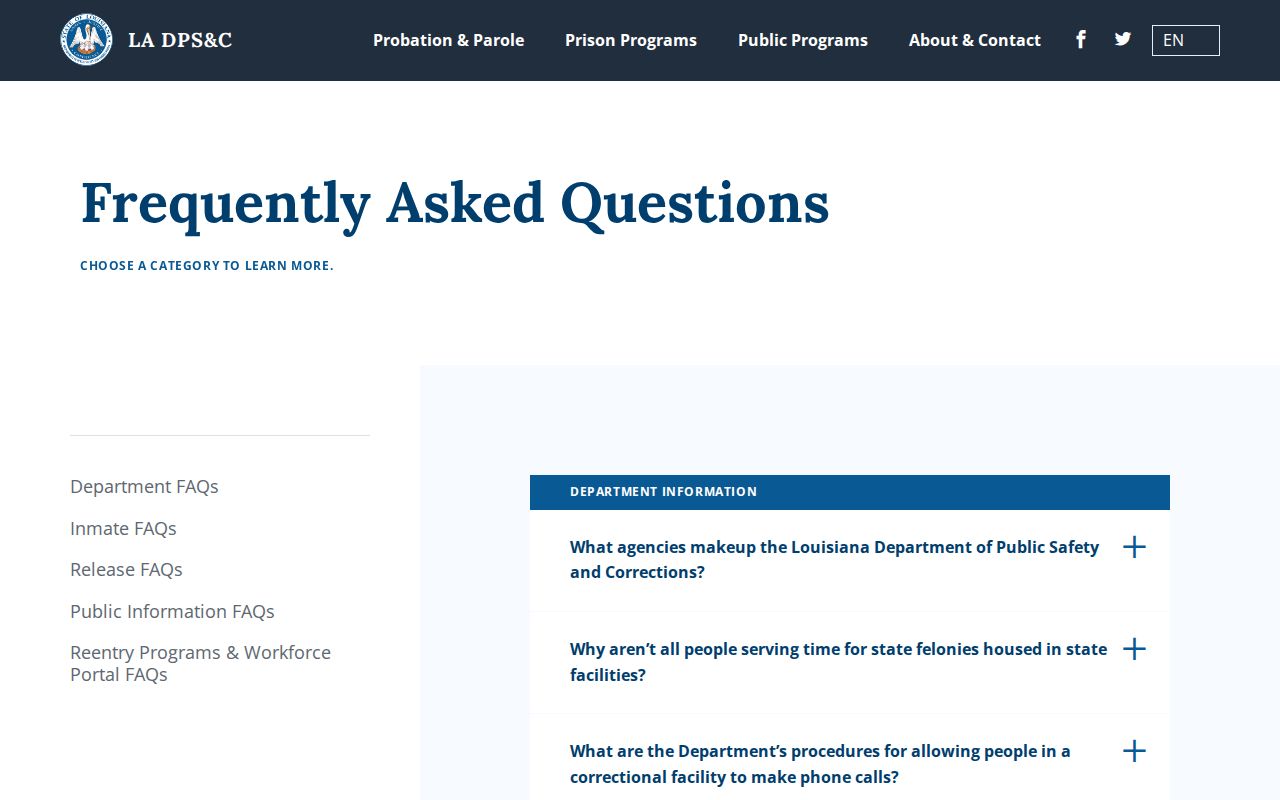
The source distinguishes the official calculation path from a personal estimate and routes disputes to the proper records process.
Pointe Coupee Good-Time Release Rules
Louisiana good time, formally called diminution of sentence, depends on offense date, conviction, sentence type, prior history, and statutory exclusions. There is no safe one-rate calculator. Under the older R.S. 15:571.3 framework, a parish prisoner sentenced without hard labor may earn thirty days diminution for each thirty days in actual custody, with a different rate for a first crime of violence. Eligible DPS&C felony prisoners under legacy rules may have other rates. Violence, sex offenses, habitual-offender sentences, repeat offenses, and cutoff dates alter eligibility.
For an eligible felony offense committed on or after August 1, 2024, R.S. 15:571.3.1 allows good time up to a maximum of fifteen percent of the sentence imposed. That is the source of the rough eighty-five-percent service idea, but it is not universal. The statute excludes sex offenders and habitual offenders, says pre-sentence credit does not itself earn this good time, and permits forfeiture. Other credits may apply.
For a qualifying parish sentence without hard labor, the sheriff determines earning under the applicable rule. For DPS&C custody, the Master Prison Record holds the controlling computation. The agency states that program credits can take time to post and are prioritized by discharge date. A web estimate cannot replace that record.
Release on diminution may also carry a legal status after prison custody ends. Under the newer provision, diminution generally places the person on unsupervised parole for the remainder of the full term. A split sentence can begin probation as the statute provides. Thus the projected date may mark a custody transition rather than complete discharge from every sentence obligation.
Why Pointe Coupee Release Dates Change
A projected release date changes when the inputs or legal rules change. The public display may also trail the official computation. The key question is not merely whether a number moved, but which custodian and document caused the change.
| Factor | Possible effect | Verification channel |
|---|---|---|
| Sentencing papers | A date may be unavailable or revised after DPS&C receives the judgment | Signed court record and DPS&C locator |
| Jail credit | Corrected time already served can move the computation | Judgment, minutes, and Master Prison Record |
| Good time or program credit | Earning, posting, forfeiture, or restoration changes the projection | Facility records or time-computation channel |
| Another sentence | Concurrent, consecutive, or aggregated terms may alter the end date | Court judgments and DPS&C computation |
| Detainer or hold | The sentence date may arrive while another custodian still claims the person | Release record and named receiving agency |
| Parole action | Eligibility or a grant can affect the route, but not prove same-day release | Parole docket, result, and later DPS&C status |
Do not declare an overstay because a public projection passed while custody status remains. Call the locator and computation lines, obtain the relevant judgment, and ask whether another hold or sentence applies.
Confirm Pointe Coupee Release Events
For a parish-jail departure, ask the sheriff for the booking-and-release event tied to the exact booking. Request the date and time, release authority or type, bond disposition, and receiving agency if public. Pair it with the latest Pointe Coupee court order. The court supplies legal authority; the jail event supplies physical execution.
For a state sentence, check statewide LAVNS, call the locator, and request the public discharge date when the question concerns the formal end of the term. R.S. 15:574.12 generally protects the full prison file, but its public categories include the discharge date. A person can leave prison before full discharge because parole, probation, or diminution may continue.
A matched VINELink release check can provide notice of a status change. Alerts may lag and are not certified release documents. Use the alert as a prompt to confirm the event through the responsible agency.
Pointe Coupee Parole Eligibility Dates
Parole eligibility is separate from good-time release and separate from a parole grant. Under ordinary pre-August 2024 provisions in R.S. 15:574.4, some otherwise eligible nonviolent cases may reach consideration after one quarter of the term, while qualifying violence or repeat cases use higher fractions or may be excluded. Special laws, prior convictions, and sentence terms can control.
An eligibility date opens a possible Board process. It does not compel a hearing result or physical departure. Check the annual calendar, the weekly docket, and the later result, then compare that action with current DPS&C status. A grant may still require an approved plan, conditions, processing, and an effective date.
The official Louisiana parole eligibility statute provides the source view below:
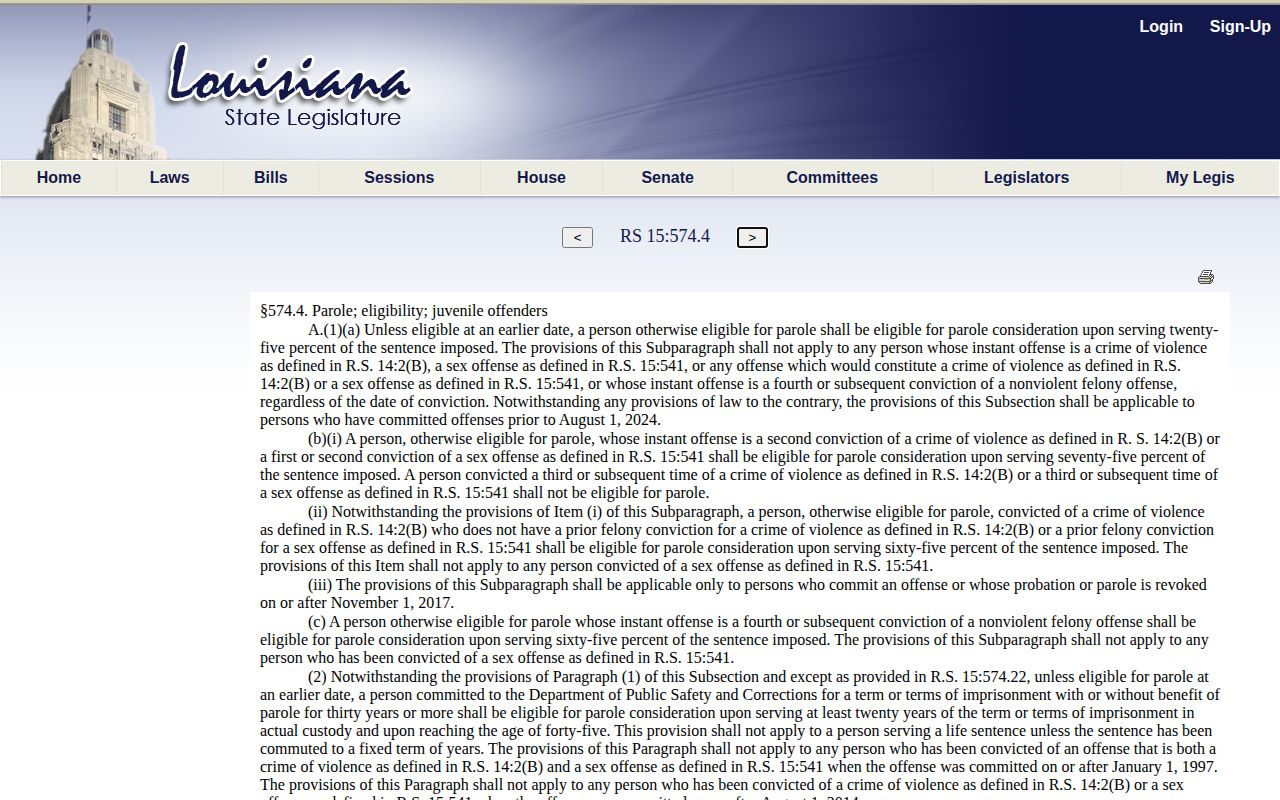
The statute is a legal input to the calculation, not a personal release-date calculator.
Pointe Coupee Computation Dispute Channels
DPS&C separates public records from sentence-computation disputes. A person in a state facility should direct a computation claim in writing to that facility’s Records Office. A state prisoner housed in the Pointe Coupee Parish Detention Center uses the Administrative Remedy Procedure identified by DPS&C. The public-record office is not the calculation-appeal channel.
When the issue is missing or incorrect sentencing material, obtain the signed court papers and confirm that the agency received them. When the issue is a public status check, use the locator. When the issue is full discharge, make a narrow statutory request for the discharge date. Matching each question to its proper channel avoids treating one partial answer as the whole release record.
Note: No official Pointe Coupee release hour, weekend rule, or fixed processing window was found, so a calculated date cannot supply a pickup time.
Pointe Coupee Date Channels Compared
A date means little without its source. Pointe Coupee Parish Detention Center records address a local booking and physical jail event. The Pointe Coupee Clerk addresses the sentence and later orders. DPS&C addresses the state computation, prison status, and assigned community-supervision district. Federal and immigration agencies have separate systems and should not be inferred from a generic “hold.”
| Custody setting | Date source | What it cannot prove alone |
|---|---|---|
| Pretrial parish custody | Court order, bond record, and sheriff event | A fixed sentence-based projected date |
| Parish sentence | Judgment plus detention-center or sheriff computation | That no other agency hold applies |
| DPS&C sentence | Telephone locator and Master Prison Record | That a future projection became an actual release |
| Parole process | Calendar, docket, result, and later DPS&C status | That a hearing date or grant equals departure |
| Federal or ICE custody | BOP locator, ICE locator, or federal court record | A Pointe Coupee jail release to the community |
If a local name disappears after a felony judgment committing the person to DPS&C, transfer is more likely than community release. Search statewide LAVNS and call the locator. Louisiana can house state prisoners in parish facilities, so physical location and legal custody do not always change at the same moment.
Pointe Coupee Release Date Record Sequence
The most reliable sequence begins with the signed sentence. It then moves to the custodian’s computation, the current custody or supervision status, and finally the completed release or discharge event. Each record corrects a different risk. The sentence can be amended. The computation can change as credit posts. The status can lag. The final event can show transfer rather than a return to the community.
When exact proof is needed, preserve the docket number, booking or DPS&C number, observation date, and wording used by the agency. Ask narrow questions. Is the date projected or actual? Does it end physical custody or the whole sentence? Is another hold recorded? Has full discharge occurred? These distinctions are more useful than a broad request for an entire confidential prison file.
DPS&C public information requests go to the agency custodian, but sentence-calculation questions belong on the computation line or in the applicable internal remedy. The Pointe Coupee sheriff form serves local booking and release events. The clerk supplies certified minutes or signed orders. Sending the same vague request to all three can produce partial answers that appear to conflict.
A written chronology helps reconcile them. Record the sentencing date, date DPS&C received the papers if known, each locator observation, any posted credit, the projected date quoted by staff, and the final event. Label each item by source. If two dates differ, ask whether one reflects a projection and the other a formal discharge. That approach preserves the agency’s exact meaning and avoids turning a preliminary calculation into a claimed release.